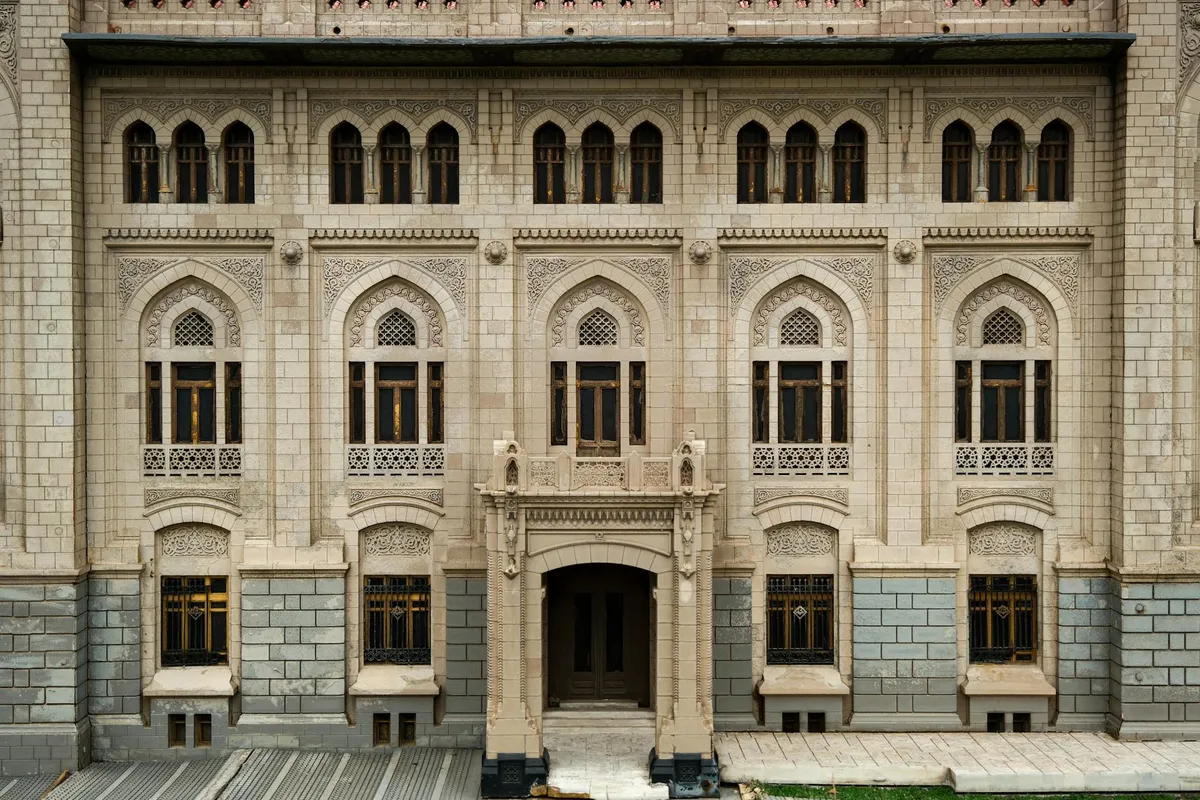
There is a particular sandstone building on the main street of a small town I know well. It went up in 1880 as a general store. Over the next century and a half, it has been a haberdashery, a chemist, a tea room, a barber shop, an electrical goods store, an insurance office, and a cafe. It is currently a bookshop. The current owners have been there for twelve years.
The building has outlasted seven different businesses. It will probably outlast several more.
I find myself thinking about this kind of building often. They are everywhere in towns of any age — modest commercial buildings, civic structures, terraces of small houses — that have witnessed the slow passage of communities through their rooms. We barely notice them. They are simply there, the texture of place, the unremarked background of daily life.
What an old building actually is
An old building is, in one sense, just an old building. Stone, brick, mortar, timber, glass. Maintained when it must be. Modified when occupants demand it. Preserved against weather and time by the cumulative effort of people who have used it.
It is also, in another sense, an instrument of memory. The building has stood while generations of people have moved through it. The grain in its floorboards has been polished by tens of thousands of footsteps. The stone of its threshold has been worn into a small concave dip by the same daily passage. The fireplace, when it had a fire, warmed people whose names are now on headstones in the local cemetery.
Buildings hold this kind of memory in a way that we rarely acknowledge but that some part of us recognizes. A genuinely old room feels different from a new one in ways that are hard to articulate but not hard to perceive.
The continuity
What strikes me most about old commercial buildings is the continuity of their use. The bookshop in the sandstone building is, at one level of description, completely different from the haberdashery that occupied the same space in 1900. Different products, different staff, different customers, different commercial relationships.
At another level of description, the activities are remarkably similar. People walk through the door. They look at things. They consider purchases. They have brief or long conversations with the person behind the counter. Money changes hands or it does not. People leave, sometimes with packages, sometimes without.
This basic pattern of small-scale commerce has continued in this specific room for 145 years. Nothing about the human nature of the activity has changed substantially. The products have changed. The pattern has not.
The losses and survivals
The town I am thinking of has lost many old buildings to fire, demolition, and the slow erosion of disuse. Several of the buildings that stood beside the sandstone one in 1880 are gone. A bank building from 1895 was demolished in the 1960s for a parking lot. A row of cottages from the 1870s burned in 1923. A mill from 1860 was pulled down in 1985 because the cost of restoration exceeded the value of the site.
What survives is a function of luck, of economic circumstance, and of the periodic decisions of individual owners and town councils. Sometimes the survival is deliberate — a heritage listing, a conservation grant, a preservationist owner. Sometimes it is accidental — the building was useful enough to maintain, the location was not valuable enough to redevelop.
The pattern of survival is not strongly correlated with architectural significance or historical importance. Many distinguished buildings have been lost. Many ordinary buildings have survived. Time keeps a distinctive curatorial style.
The slow process of stewardship
Old buildings survive because individual people, over generations, have made the small decisions to maintain them. The roof is replaced at thirty-year intervals. The mortar is repointed every fifty years. The plumbing is updated when codes change. The electrical system is rewired when the previous one becomes inadequate.
None of these acts of maintenance is heroic. Each is a routine response to a specific need. The cumulative effect, sustained across generations, is the survival of the building.
This is a particular kind of human achievement that does not produce visible monuments. The maintenance is largely invisible. The thanks, when they come, are vague — "the building is in good shape" rather than "thank you for the specific decisions across two centuries that produced its current state." The work is done because the work needs to be done, not because anyone will notice.
What this teaches
I find old buildings interesting partly because they make visible a kind of value that the contemporary economy mostly does not measure. The sandstone building is, on a strict economic calculation, probably less efficient than a new building would be on the same site. The walls are thick. The insulation is inadequate. The plumbing is awkward.
But the building has 145 years of accumulated use, accumulated character, accumulated meaning to the community. These are real values that do not appear in spreadsheets. The decision to maintain rather than demolish reflects something other than narrow economic calculation.
This kind of preservation depends on communities that recognize the value and on owners willing to act on that recognition. Both are not automatic. Both can be lost in a generation through neglect or through changes in who makes decisions about a place.
The contemporary question
Our contemporary built environment will, in turn, become the inheritance of future generations. Most of what we are building now will not survive. The buildings constructed for short economic lives — the strip malls, the office parks, the temporary commercial structures — will be gone within a generation or two.
Some buildings being constructed now will become the cherished old buildings of future towns. We are usually wrong about which ones. The buildings that survive are not always the ones that seem most important at construction. Often they are the ones that were modest enough to stay useful as conditions changed.
A closing observation
I find myself thinking about the sandstone building when I walk down its street. The current owner came from a city, started the bookshop on impulse, has stayed for twelve years and counting. She did not build the building. She inherited the responsibility of maintaining it. She will probably eventually pass that responsibility to someone else.
The building will continue. Other businesses will occupy its rooms. The wear on the stone threshold will deepen by another fraction of an inch over the next century. Generations of customers will pass through doors that were hung by carpenters who died long ago.
The work of maintenance continues. The building stands. The community remembers itself, partly, through the buildings that have remembered it.