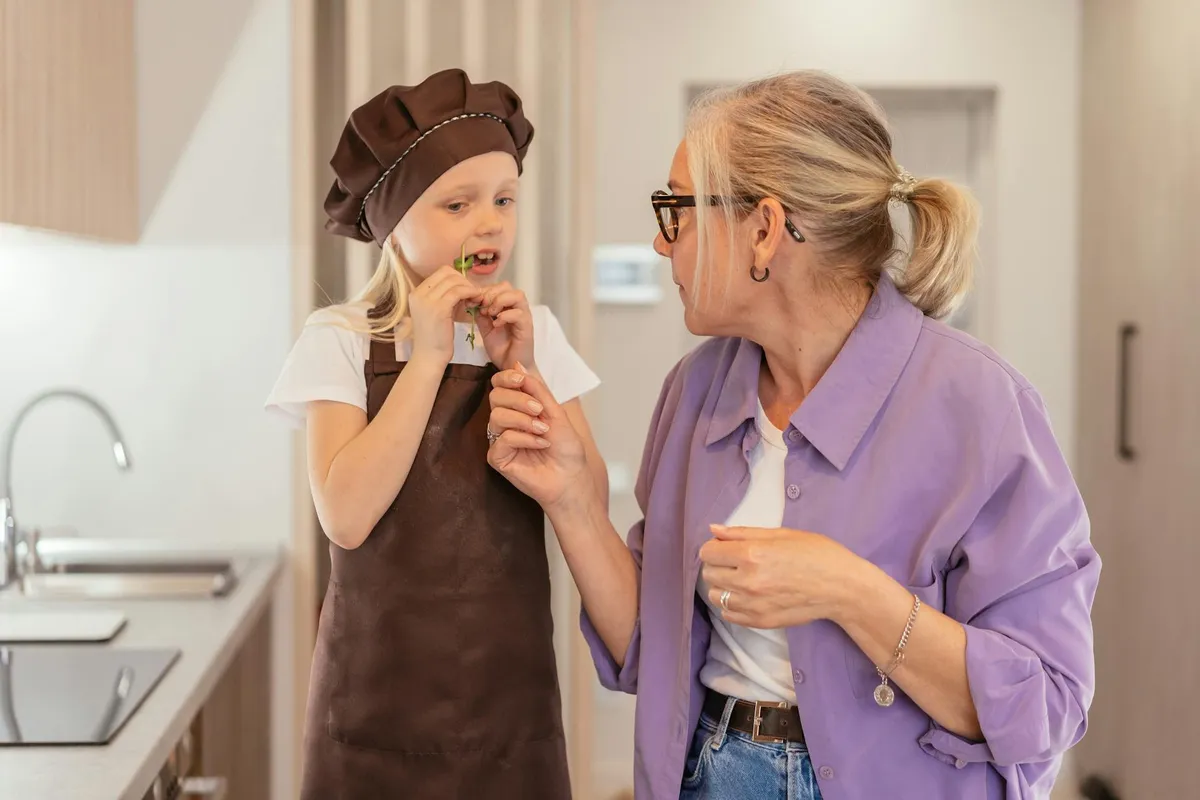
My grandmother told me, when I was perhaps eight years old, the story of how her own grandmother had immigrated. The story involved a long sea voyage, a delayed reunion with relatives already settled, an early period of poverty followed by gradual establishment, and a specific incident involving a stolen chicken that had become a family touchstone.
I remember the story now, decades later, in approximately the form my grandmother told it to me. I have told it, in turn, to my own children, who will probably tell it to theirs.
I do not know what is true in the story. The stolen chicken probably happened. The general arc — the voyage, the establishment — is consistent with what I have been able to verify through documentary research. The specific dialogue and the particular details have surely been smoothed and shaped by transmission.
This is, I think, a roughly typical case of family oral tradition. It also represents a tradition that is in substantial decline.
What family stories actually are
Family stories are the narrative elements that get passed down within families across generations. They include origin stories (immigration narratives, marriage stories, family-founding events), character stories (the eccentric uncle, the heroic grandmother, the disgraced cousin), incident stories (the time the house burned, the year the crops failed, the fight at the wedding), and explanation stories (why we do not eat that, why we always vacation there, why we never speak to those people).
The stories serve several functions simultaneously. They explain family identity ("we are the kind of people who..."). They preserve memory across generations. They convey values and lessons. They constitute a substantial portion of what makes a particular family distinct from other families.
The stories are typically not recorded in any documentary form. They exist only in the memory of family members and in the act of telling.
The transmission problem
Oral tradition has well-known transmission characteristics. Stories that are told frequently and to children with whom the teller has substantial relationship tend to be transmitted with reasonable fidelity for two or three generations. Stories that are not retold, or that are told only at the periphery of family life, tend to fade within a single generation.
The contemporary conditions for oral transmission are substantially worse than they were a century ago. Several factors:
Reduced multigenerational contact. Children now spend less time with grandparents than they did in earlier generations. The contexts in which stories were once told (long visits, shared meals, working alongside elders) have substantially diminished.
Competing entertainment. The contexts that once produced storytelling now compete with screen-based entertainment that crowds out oral narrative.
Reduced family stability. Family disruption (divorce, geographic dispersion, estrangement) interrupts the intergenerational lines along which stories travel.
Changed conversational norms. The kind of extended storytelling that supported oral tradition has largely been replaced by shorter conversational forms.
The cumulative effect is that contemporary families are losing oral tradition faster than previous generations did. The stories that would have been transmitted to children in 1925 are often not being transmitted to children in 2025.
What gets lost
The losses are several things at once.
Specific stories: The actual narratives that families carried — origin stories, character stories, incident stories — fade as the people who knew them die without successfully transmitting them.
Family identity: The sense of "we are the kind of people who..." that family stories supported diminishes when the stories diminish.
Connection to past: The felt connection to ancestors that comes from knowing their stories diminishes.
Sense of context: The understanding of where one comes from and how one fits into a longer sequence of family life diminishes.
The losses are gradual and largely invisible. Each family that loses its oral tradition does so quietly. The cumulative cultural effect is substantial but unmarked.
What survives
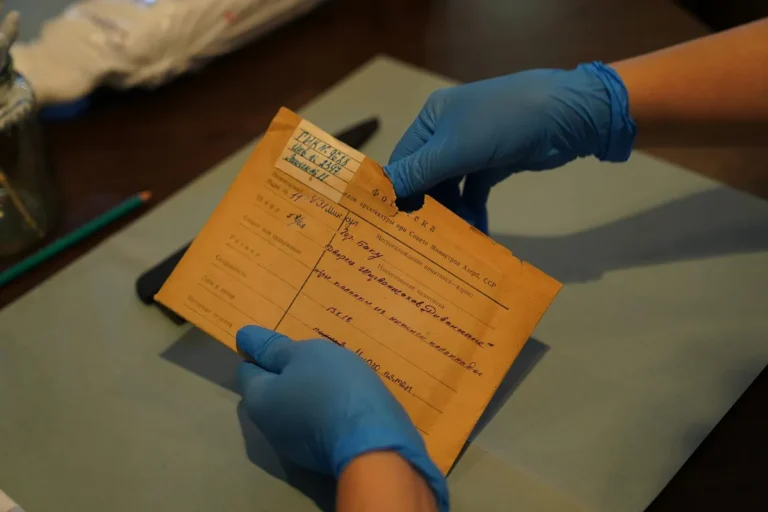
The family stories that survive past three generations are mostly the ones that someone wrote down or recorded. Family histories produced by amateur genealogists. Memoirs written by elderly relatives. Oral history recordings made by interested grandchildren.
These documentary preservations have their own limitations. The act of writing down a story changes it. The story becomes fixed in a particular form rather than continuing to evolve through retelling. The energy and personality of the original telling is largely lost.
But documentary preservation does preserve the basic content. The story of my great-great-grandmother's immigration would be lost to me by now if no one had ever written it down. I learned it because my grandmother told it to me; she had learned it because her mother had told her; her mother knew it because she had been there. By the time the story reaches my own grandchildren, it will have passed through five generations of oral transmission. Without documentary anchoring at some point, it would not survive that distance.
The recording opportunity
The contemporary opportunity is that recording technology has become trivially accessible. A smartphone can record an hour of conversation with quality that would have required professional equipment a generation ago. The recordings can be stored indefinitely at minimal cost.
Almost no families take this opportunity systematically. The stories that should be recorded — from grandparents while they are still alive and willing to talk — mostly are not. The recordings that should exist mostly do not.
This is a particular case of the general pattern that easy preservation rarely happens. The stories will be lost not because preservation is impossible but because no one quite gets around to doing it.
The interview practice
The methodology that works for family oral history is straightforward. A few hours with a willing elderly relative, a recording device, and a set of open-ended questions about their life. The questions do not need to be sophisticated. "Tell me about your childhood." "What do you remember about your parents?" "What was your wedding like?" "What is the family story that you most want passed down?"
The recordings produced by this kind of interview are surprisingly substantial. An hour of conversation typically yields material that would take many days to extract through written correspondence. The interview format works because it is conversational rather than formal.
The recordings, once made, last indefinitely. They can be transcribed if anyone has the time. They can be referenced by descendants who want to know what great-grandmother actually sounded like. They constitute a documentary preservation of oral material that would otherwise be lost.
What this teaches
Family oral tradition is one of the longest-running cultural institutions in human history. It is older than writing, older than civilization, older than language as we know it. It has carried memory across thousands of generations through purely oral means.
It is now eroding faster than at any point in recorded history. The conditions that supported it for millennia have changed in fundamental ways within a few generations. The replacement mechanisms (documentary preservation, recording technology) exist but are inconsistently applied.
The result is that contemporary families are losing oral tradition at a pace that has no historical precedent. The stories that survived for thousands of years through oral transmission are now being lost within decades through inattention.
A closing observation
If you have living grandparents or great-aunts or older relatives who carry family stories, consider recording them. The technology is trivial. The time required is modest. The stories cannot be recovered after the relative dies.
If you are the oldest generation in your family, consider what stories you carry that should be transmitted. Tell them to your grandchildren. Write them down if you can. Make sure the things only you know do not die with you.
The chain of transmission has been continuous for thousands of generations. Each generation has the choice of whether to maintain the chain or to let it break. The choices we make now will determine what future descendants of our families will know about where they came from.