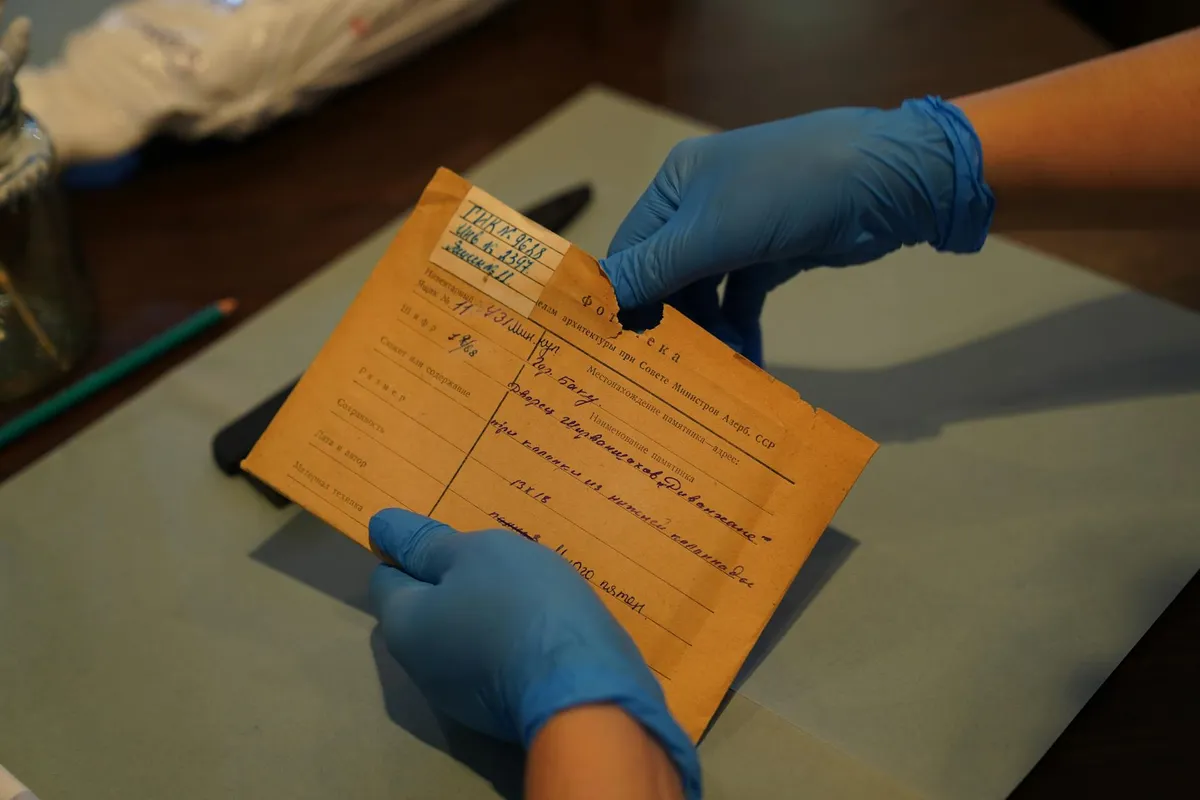
In a small room above a former bank in a town I know well, two retired women spend three afternoons a week sorting photographs. The photographs come from estate sales, from donations by descendants who do not know what to do with grandfather's collection, from boxes left on the doorstep by people who simply could not bring themselves to throw them away.
Each photograph gets examined. The subjects are identified when possible — sometimes from inscriptions on the back, sometimes from family trees the women have been cross-referencing for decades. The location is determined when possible. The date is estimated. The image is scanned, cataloged, and filed in acid-free folders.
The two women are the entire active membership of the local historical society. They are in their seventies. The work they do will, in some form, last for centuries. Their successor is uncertain.
What these societies actually are
Local historical societies are mostly small, mostly volunteer, mostly underfunded organizations that exist to preserve community memory. The typical society has a small membership (often under 100), a tiny annual budget, irregular meeting attendance, and an aging core of dedicated volunteers who do most of the actual work.
The functions vary by community. Most societies maintain some kind of archive — photographs, documents, oral history recordings, sometimes physical artifacts. Some operate small museums in donated buildings. Some publish irregular newsletters or journals. Some maintain heritage walking trails or signage. Some advocate for preservation when historic buildings are threatened.
None of this work is particularly visible. The annual reports go to small audiences. The publications circulate among a few hundred readers. The archives serve occasional researchers, family genealogists, the rare academic. The day-to-day operation happens in donated rooms with donated furniture by volunteers contributing their own time.
What survives in these archives
The archives of a typical local historical society are, by larger archival standards, modest. A few hundred boxes of photographs. A few thousand pages of correspondence and documents. Some oral history recordings, often on aging cassette tapes that need to be digitized before they degrade beyond recovery.
What is in these archives is precisely the material that no national institution preserves. The Smithsonian does not collect family photographs from a small Western Australian town. The British Library does not preserve the meeting minutes of a regional agricultural association. The work of preserving local memory falls almost entirely to local volunteers in small organizations.
If the local historical society fails, the material it holds typically disperses. Photographs are scattered. Documents are discarded. The institutional knowledge of who appears in which photograph dies with the volunteers who held it.
The succession problem
The most pressing problem facing most local historical societies is succession. The dedicated volunteers are typically in their seventies and eighties. They have done this work for decades, in many cases. They will not do it forever.
Younger members are scarce. The work is unglamorous and time-consuming. The institutional structures that produced the current generation of historical society volunteers — small-town middle-class women with leisure time, retirees with strong community ties, professionals with multi-generational connections to place — have largely dissolved.
The result is that many local historical societies face an uncertain future. The current generation will be the last for many of them. What happens to the archives when the society itself fails is an open question that few are facing directly.
The case for preservation
The case for preserving local historical archives is not primarily an academic one. The audience for local history is not academic researchers, who can usually access major collections. The audience is the descendants who want to know about a great-grandfather, the new resident who wants to understand the town they have moved to, the schoolchild doing a project on local history, the person walking past an old building who wonders what it used to be.
The archives serve a kind of community memory function that nothing else replicates. Without them, places lose their connection to their own past. The photograph of the main street in 1925 is not in the local historical society archive because anyone famous appears in it. It is there because it shows what the main street looked like in 1925, which is information valuable in its own right and unavailable from any other source.
The slow erosion
What seems most likely, looking at the actual situation of most local historical societies, is a slow erosion. Not dramatic failure but gradual decline. The current volunteers will continue until they cannot. The replacements will be inadequate or absent. The collections will sit in donated buildings until those buildings are needed for something else. The materials will be dispersed in piecemeal ways, with much loss and some preservation.
This erosion is happening now in many places. The communities affected mostly do not notice. The loss becomes visible only when someone goes looking for information that is no longer accessible.
The institutional alternatives
Some efforts have been made to consolidate local historical materials in larger institutions — state libraries, regional museums, university archives. These efforts can preserve the materials but at the cost of removing them from their community context. A photograph of a small town's main street in 1925, in the state library archive, is preserved but no longer easily accessible to the community it documents.
Digital preservation offers another partial solution. Scanned and digitized materials can be made available online, accessible to anyone anywhere. The work of digitization, however, requires the same kind of dedicated volunteer effort as the original archival work. And digital preservation has its own challenges — formats that become obsolete, hosting platforms that disappear, the ongoing costs of maintenance.
Neither institutional consolidation nor digital preservation fully addresses the community memory function that local historical societies serve.
What this teaches
I find the situation of local historical societies interesting partly because it is so unromantic. There is no dramatic failure to address. Just a slow erosion that is happening quietly in thousands of small communities and that almost no one is paying attention to.
The volunteers who do this work do it without much recognition. They will not be famous. Their contributions will not appear in grand histories. They are simply doing the work because the work needs to be done, and because they have inherited from their predecessors a sense that someone needs to do it.
This kind of patient, unrewarded, multi-generational work is increasingly rare in contemporary culture. The two women sorting photographs in a room above a former bank are participating in a tradition that may or may not continue past them. The continuation depends on people who do not yet exist deciding to take up the work.
A closing observation
If you live in a town with a local historical society, consider visiting. The volunteers are typically grateful for visitors and willing to share what they know. You will probably learn something specific about the place you live that you would not have known otherwise.
If the society needs help and you have time, consider helping. The skills required are not technical. Patience and care are most of what the work demands.
The collections continue, for now, because individual people decide to maintain them. The continuation is not automatic. It depends on choices that get made by the people available at each moment.